
Why Trade Is Sweet
Unit 4 · Lesson 4.8 · Last updated June 2026
A 45-minute simulation lesson where students trade Starburst candies across three rounds of increasing trade openness, track changes in utility, and connect their experience to real-world principles of voluntary exchange.
Overview
Students engage in a trade simulation to explore the benefits of voluntary exchange. Through three rounds of trading with progressively wider access — no trade, limited international trade, and free international trade — students track changes in utility and see how trade increases overall efficiency and improves outcomes for most participants. The debrief and discussion highlight the advantages and potential challenges of trade, setting the stage for deeper exploration of trade policies in upcoming lessons.
Learning Objective
- Explain why people trade.
Create a free account, or log in.
Get full access to materials, the complete lesson sequence, aligned standards, and every lesson across all units.
Already a member? Sign in here.
Materials
- Instruction Slides (display during class period)
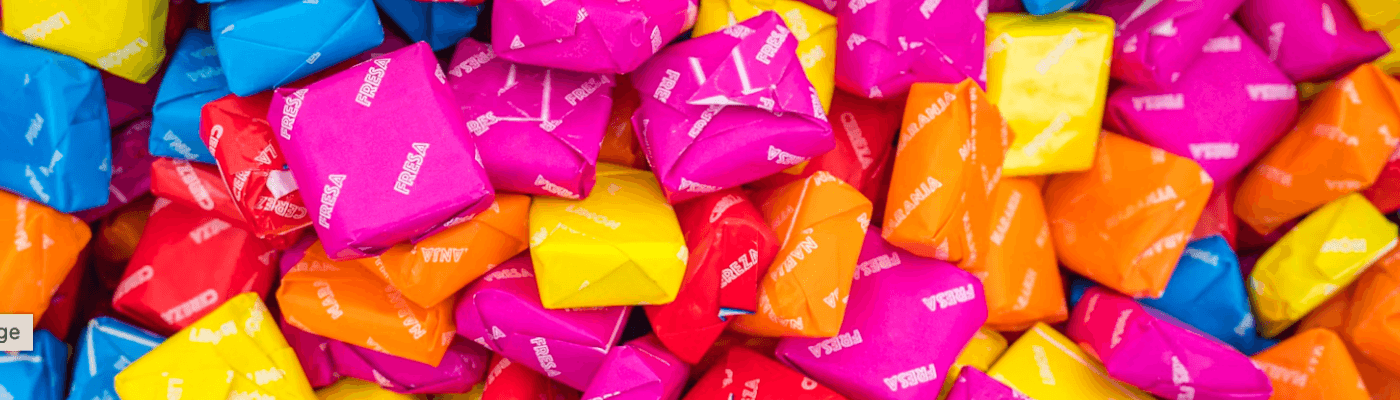
- Original flavor Starbursts (3 candies per student — do not allow students to select their own candy)
- Student Handout (1 copy per student)
- Suggested Responses (1 copy for educator use)
Lesson Sequence
Slides 2–3
- Display Slide 2. Direct students to discuss the question with a peer. Call on several students to share and reinforce that trade includes exchanging money for goods and services. (Additional educator tips and suggested answers are in the notes section throughout Instruction Slides.)
- Proceed to Slide 3. Identify the learning objective and remind students that participation in trade is one of the determinants of national wealth introduced in Lesson 4.1.
Slides 4–16
- Advance through Slides 4–6. Distribute 1 copy of Student Handout to each student. Instruct students to read the "Introduction" and complete the "Preferences" and "My Utility" portions of their handout. Remind students that utility is the satisfaction they derive from each flavor.
- Advance to Slide 7. Tell students they must not eat or exchange candy until directed to. Note: If students do not follow these instructions the simulation results will be skewed. Randomly distribute 3 pieces of candy to each student — do not allow students to select their own.
- Proceed to Slide 8. Use the example to model how students calculate individual utility for each round. Click to reveal text and instruct students to complete the "Round 1 — No Trade" portion of their handout.
- Advance to Slide 9. Place students into countries (e.g., table group, row, or another defined group) and instruct 1 student per country to total the utility of all baskets in their country.
- Proceed to Slide 10. Ask a student from each country to report their total utility. Sum the responses and record total class utility on a whiteboard (or in the table on Slide 10). Direct students to record the data in the "Class Data" table on their handout.
- Display Slide 11. Explain that during Round 2, students may trade with anyone in their country or with people in countries they share a border with (adjacent groups or rows). Tell students to begin limited international trade. Allow approximately 2–3 minutes or enough time for most students to have traded at least once.
- Stop the round and proceed to Slide 12. Direct students to calculate individual utility at the end of Round 2 and record it on their handout. Note: Some students may end up with fewer candies if they determined that trading 2 low-utility flavors for 1 high-utility flavor was in their best interest.
- Repeat Step 6 to calculate and record total class utility at the end of Round 2.
- Proceed to Slide 13. Poll the class on who traded and who did not. Click to reveal questions 2 and 2a — call on 1 pair of trading partners to respond. Click to reveal question 3 — call on 1 non-trading student. Discuss questions 4 and 5 as a class. Emphasize the difficulty of enforcing trade barriers. (See slide notes for further explanation.)
- Advance to Slide 14. Tell students they may now trade freely with anyone in the class (free international trade). Allow approximately 2–3 minutes.
- Stop the round and proceed to Slide 15. Students calculate individual utility for Round 3 and record it on their handout. Repeat Step 6 to calculate and record total class utility for Round 3.
- Display Slide 16 and debrief student choices during Round 3, as in Step 11.
Slides 17–22
- Progress through Slides 17–22. For each question, instruct students to discuss with 1–2 classmates (~1 minute), then call on several students to share. Add to responses as needed (reference Suggested Responses). After each question, click to reveal the orange textbox and tell students to jot key takeaways in the space on their handout.
Slides 23–25
- Advance through Slides 23–24. Instruct students to consider the question as they watch the ~1-minute video clip demonstrating how prominent trade is in everyday life. Debrief as a class. Tell students that for the remainder of Unit 4, they will learn more about trade and evaluate its impact on various stakeholders.
- Display Slide 25. Allow students a moment to discuss the prompt with a classmate. Call on pairs to share until all four principles of economic thinking have been fully addressed. (See slide notes for an overview of each principle and Suggested Responses for support.)
Aligned Standards
Voluntary National Content Standards in Economics
What Educators Are Saying
The lessons on trade were well received by students and other teachers.
Engaging lesson for students. Students get a simplistic view of complicated concepts that are involved in their everyday lives.
Students were actively engaged in both the simulation and the discussion.