
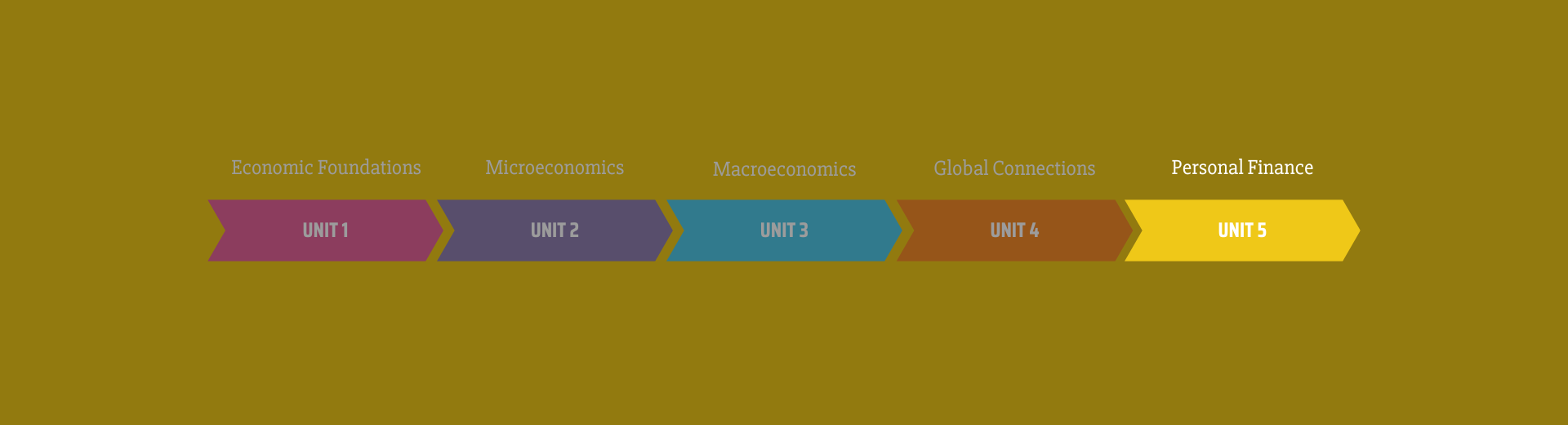
Unit 5 applies economic thinking to students' own financial lives, covering compound interest, investing, credit, budgeting, insurance, and career planning. These high school personal finance lesson plans are grounded in real-world data and scenarios, helping students develop the habits and decision-making skills they'll use long after the course ends. Lessons build sequentially on one another throughout the unit.
How to use this unit
Lessons build on one another and are designed to be taught sequentially. They can also be used as standalone lessons.
New to Econiful?
Visit the Economics curriculum overview to explore all units and lessons.
Become a member
Unlock all 13 lessons with a free Econiful membership ↗
Professional development
Deepen your practice with the Unit 5 On-Demand PD Module ↗
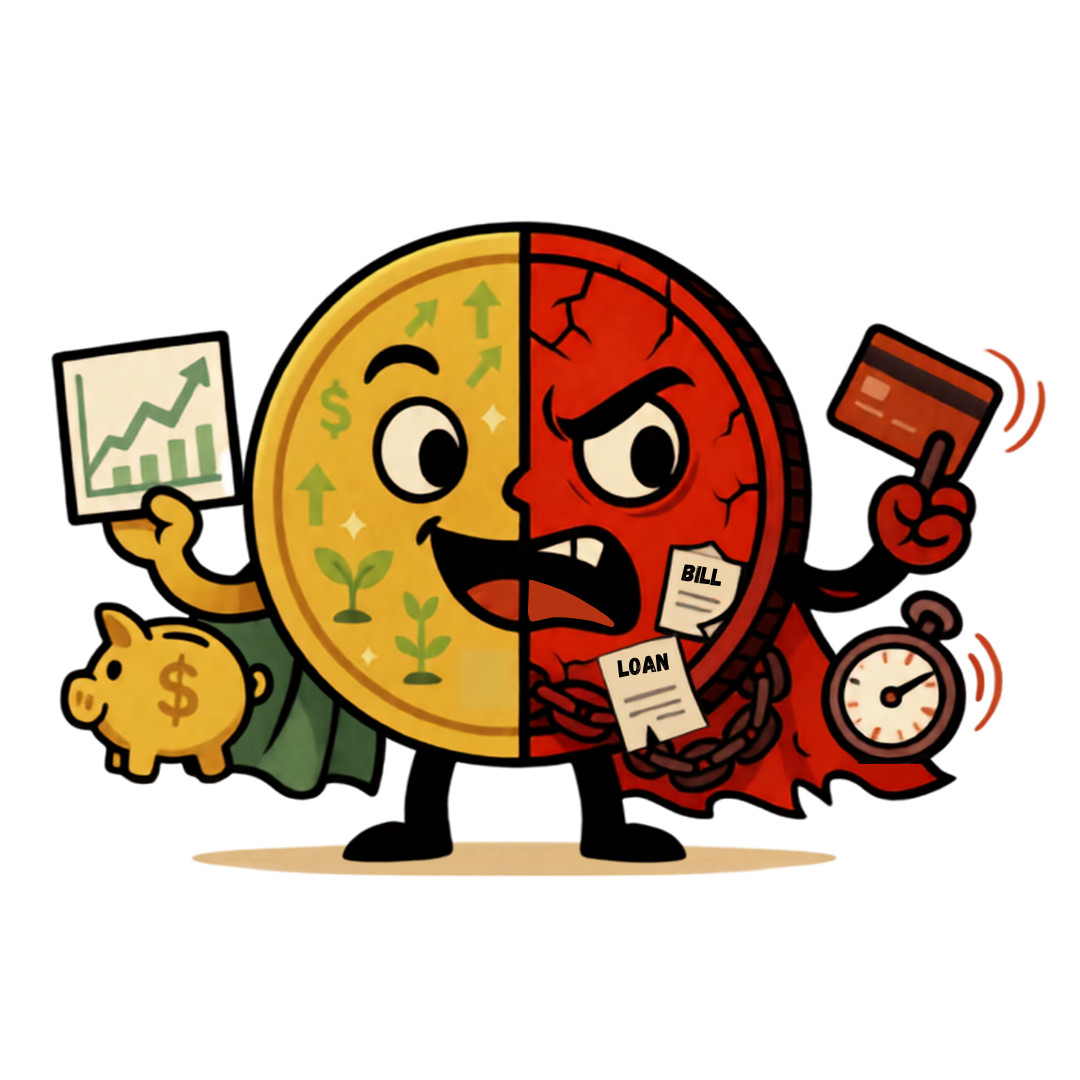
5.1 The Promise and Peril of Compound Interest
Through real-world examples, data tools, and financial scenarios students examine how compound interest can work both for and against individuals, and gain a foundational concept they will revisit throughout the personal finance unit.

5.2 Investing Like an Economist
Students formulate foundational investing advice through a choose-your-own-adventure-style activity.

5.3 Thinking About Credit Like an Economist
Students explore the costs and benefits of using credit, specifically credit cards and student loans, through video clips, readings, and discussions of real-world credit scenarios. They then apply economic thinking to offer practical financial advice in a hands-on "life coach" activity.

5.4 Why Credit Scores Matter for Your Future
By playing a board game, students discover why credit scores matter and how their actions can affect their score. In the latter half of the lesson students take a quiz to reinforce the personal finance concepts introduced thus far.
Membership required for the full lesson materials.

5.5 Making Informed Career Decisions
Students access a variety of resources, including the Bureau of Labor Statistics Occupational Outlook Handbook, to research the costs and benefits associated with an occupation of interest to them.
Membership required for the full lesson materials.

5.6 Decoding Paycheck Deductions
Students analyze earnings statements to explain why workers with the same salary can have different take-home pay. Through guided investigation, students learn how taxes, benefits, and individual choices affect net pay and consider how planning influences financial decisions over time.
Membership required for the full lesson materials.

5.7 Assessment Preview
Students are introduced to and begin preparing for the end-of-unit assessment, Planning for Future You, which will be completed in Lesson 5.12.
Membership required for the full lesson materials.

5.8 An Introduction to Budgeting
Students learn what a budget is and are challenged to create a balanced budget that reflects their priorities in a stations-based activity.
Membership required for the full lesson materials.

5.9 A Closer Look at Budgeting
Students learn about budgeting methods and then apply their knowledge to realistic scenarios, strengthening their ability to offer practical, evidence-based financial advice.
Membership required for the full lesson materials.

5.10 Thinking About Insurance Like an Economist
Through a vocabulary exercise and a choice-based reading, students learn how renters or car insurance works and how insurers evaluate risk and set premiums. Learners then apply the principles of economic thinking to realistic insurance decisions.
Membership required for the full lesson materials.

5.11 How to Be a Savvy Consumer of Financial Information
Students work through a digital "Boot Camp" to spot the warning signs of questionable financial messaging. Through real-world examples, they identify common persuasive tactics and build habits for responding thoughtfully using credible sources.
Membership required for the full lesson materials.
5.12 Planning for Future You
Grounded in real-life relevance, this summative assessment invites learners to apply economic principles by setting a meaningful long-term financial goal and crafting personalized, practical advice to help achieve it.
Membership required for the full lesson materials.

5.13 Semester Post-Assessment
A no-stakes test of economic literacy is repeated at the end of the semester to determine growth.
Membership required for the full lesson materials.
