Reflecting on Our Partnership with Tucson Teachers
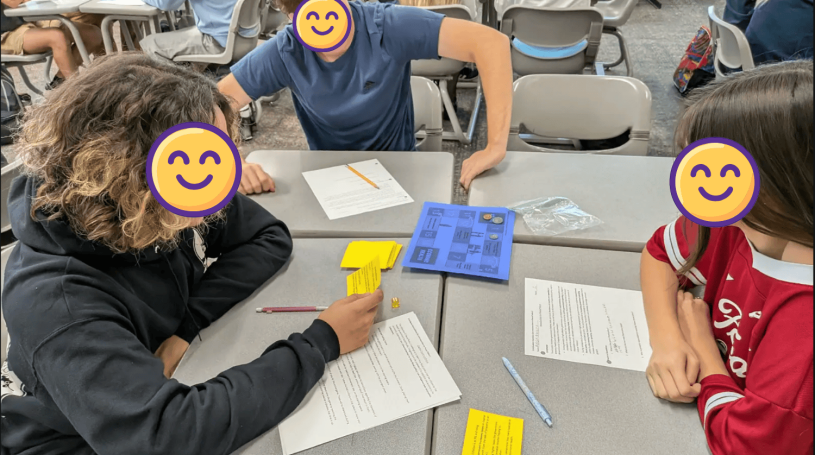
Last fall, we partnered with a local Tucson high school to do something we believe deeply in: test our curriculum in real classrooms. We listened carefully to teachers and students, and used what we learned to make our materials stronger.
Across four on-level economics courses, two teachers implemented 64 lessons from Econiful’s high school economics curriculum. Throughout the semester, we observed classrooms, coached teachers, gathered student feedback, and worked alongside a research partner to better understand how curriculum design supports learning in practice.
What we found was encouraging and affirming.
The Curriculum Works
The evidence we collected consistently showed that students benefited from Econiful’s curriculum.
Students pointed to active lessons as the most memorable and impactful parts of the course. Simulations, data-analysis tasks, movement-based activities, and the self-paced “Investing Adventure” from Lesson 5.2 stood out as experiences students referenced long after completing them.
“This is one of the classes where I’m actually learning something I will be using in the future.”
—Student
Teachers reported that the curriculum improved both their confidence and their students’ learning.
“I learned more economics from teaching this curriculum than I learned in my college course. The way everything was structured made the content relevant for my students and me, and I was surprised by how much I ended up enjoying teaching it.”
—Teacher
What We Learned
Observing the curriculum across classrooms helped us identify where materials were already robust and where additional clarity and support could make a difference.
Clear materials matter.
Students and teachers were most successful when lessons included explicit guidance about what to do, how to do it, and why it mattered.Active learning drives durable understanding.
Simulations, data exploration, and hands-on activities produced strong engagement and long-term retention.Assessments need scaffolding.
Performance-based assessments are powerful—but both teachers and students benefit from sample submissions, annotated rubrics, and opportunities to practice scoring.
What We Changed
- Clarified transitions and step-by-step instructions in slides
- Added support for simulation setup and debrief into lesson slides
- Revised lessons to include summative assessment practice scoring
- Prioritization guidance for lesson adjustments
We appreciate the Tucson teachers who opened their classrooms to us!