

1776: A Pivotal Year for the U.S. and for Economics
Every semester when it was time to introduce my students to Adam Smith I'd ask, "What makes the year 1776 particularly significant?" My students, many of whom had taken my AP U.S. History course the year before, would inevitably bring up the American Revolution and the Declaration of Independence. I would tell them they were incorrect and that the real answer, obviously, was the publication of The Wealth of Nations.
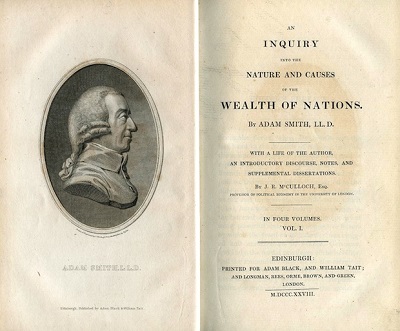
It was a joke (mostly). But the premise isn't entirely off base. Because 1776 wasn't just the year the United States declared independence. It was also the year a Scottish moral philosopher named Adam Smith published a book that would become the foundation of modern economics. And the two events were more connected than most students often initially realized.
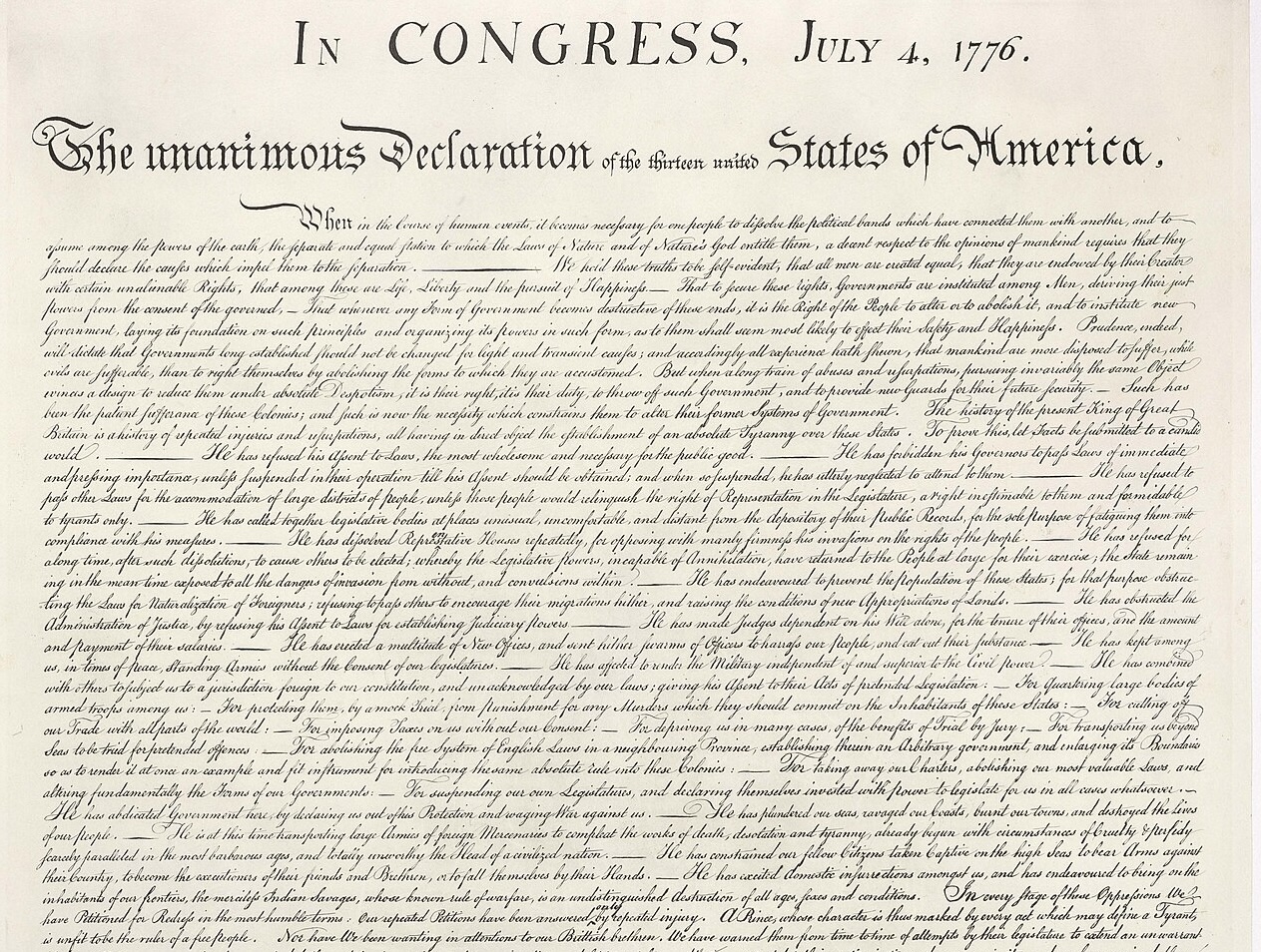
The Wealth of Nations was published on March 9, 1776. The Declaration of Independence followed on July 4. As the country marks its 250th anniversary this year, both documents are worth revisiting together. They came out of the same year, the same intellectual tradition, and in response to similar political and economic questions. And as it turns out, a lot of what Econiful's curriculum covers, from how markets work to why trade policy matters to what makes economies grow, traces directly back to ideas that were in the air in 1776.
Two Documents, One Thesis
Both documents make the same basic argument in different domains: leave people free to pursue their own interests, and the result is coordination, not chaos.
What's easy to miss about both documents is that they're making a similar argument. The Declaration calls for self-determination, the right of people to freely choose their form of government. The Wealth of Nations says something parallel about the economy: when people are free to pursue their own interests, the result isn't chaos. It's coordination. Markets don't require a central authority directing outcomes because, as Smith described it, an "invisible hand" does that work through millions of individual decisions adding up to collective benefit.
That's not a coincidence. Jefferson's "pursuit of happiness" and Smith's framework of self-interest both grew out of the same intellectual tradition, the Scottish and Continental Enlightenment, which held that people are capable of reasoning and judging for themselves, and that good institutions protect that capacity rather than override it.
This is exactly the territory that Lesson 1.2, Lesson 1.3, and Lesson 1.4 cover in Econiful's Unit 1: that each person is best positioned to weigh their own costs and benefits, that there is no single right decision, and that individuals are generally trying to make themselves better off. Smith would have recognized all of it. And in Lesson 2.1, students see those principles play out in actual markets, where buyers and sellers pursuing their own interests end up generating outcomes that work for both.
The same idea carries into Econiful's Unit 5 personal finance curriculum. Lessons 5.8 and Lesson 5.9 on budgeting don't prescribe a single right way to manage money. They're built around the principle that each person is best positioned to decide what works for them.
The American Revolution Was Also an Economics Argument
The Declaration's complaints about trade and taxation are mercantilism in action, the same system Adam Smith was dismantling in The Wealth of Nations.
It's easy to teach the American Revolution as a story about political philosophy and military history, but the colonists' grievances were substantially economic. Read the Declaration and you'll find charges against the Crown for cutting off colonial trade, for imposing taxes without consent, for rigging the rules of commerce in ways that extracted wealth from the colonies and funneled it back to Britain.
This describes mercantilism, the dominant economic system of the era, which held that colonies existed to enrich the mother country. And mercantilism was exactly what Smith was dismantling in The Wealth of Nations. The colonists and Smith were critiquing the same thing from different angles: one through a declaration of political independence, the other through ~1,200 pages of economic argument.
Smith was aware of the American crisis as he wrote. He acknowledged it directly. Historians have noted that if Smith's earlier proposal, granting colonies parliamentary representation proportional to their tax contributions, had been adopted, the whole conflict might have been avoided.
Students who understand trade policy have a much richer lens for understanding why the Revolution happened. Econiful's Unit 4 addresses this directly. Lessons 4.1 and Lesson 4.8 examine the role that more open trade plays in economic well-being, the case Smith was making. And Lesson 4.9 and Lessons 4.10 put students in the position of weighing the costs and benefits of unrestricted trade against the logic of tariffs and trade restrictions, exactly the debate that was tearing the British Empire apart in 1776.

The Rules of the Game: Why Institutions Matter
Smith and the founders both understood that markets and self-government depend on the same thing: institutions that protect individual agency rather than override it.
There's a third thread connecting these two documents, one that economists took another two centuries to fully work out: institutions matter.
Smith understood that markets don't function in a vacuum. They need predictable rules, enforceable contracts, and legal systems that don't arbitrarily favor the powerful. The founders understood the same thing, which is why so much of the Constitution is about institutional design: separating powers, establishing courts, creating conditions for stable governance.
Modern economic research has put rigorous evidence behind this intuition. The 2024 Nobel Prize in Economics went to Daron Acemoglu, Simon Johnson, and James Robinson for work showing that inclusive institutions, ones that distribute political and economic power broadly rather than concentrating it, are the primary driver of long-run prosperity. Countries with extractive institutions, the kind Smith criticized and the founders were breaking away from, tend to stay poor. Countries that build inclusive ones tend to grow.
Students can actually experience this firsthand. Lesson 4.2 features a simulation where students navigate institutions of varying quality as a startup, and the lesson directly references Acemoglu, Johnson, and Robinson's research. Lesson 4.1 connects institutional quality to standards of living. And Lesson 2.14 puts students in the middle of the ongoing debate about how much government should be involved in markets, a question that's been ongoing since 1776.
Why 1776 Is Worth Teaching
The Declaration of Independence and The Wealth of Nations came out of the same year, the same intellectual tradition, and in response to the same set of pressures. That's easy to lose sight of when we teach American history and economics as separate courses with separate vocabularies. But the founders weren't just building a country. They were betting that individuals, given the right institutions and the right freedoms, would make choices that added up to a good, if imperfect, society. Smith was making the same bet in the economic sphere.
Neither of them claimed it would be straightforward. Both turned out to be right in ways their authors didn't fully anticipate, and complicated in ways they didn't fully reckon with. The arguments they started live on.
So when your students ask what happened in 1776, tell them about the Declaration. And then mention the Scottish philosopher who published a book four months earlier that economists are still arguing about today.

Ready to bring these ideas into your classroom?
Become an Econiful member for free access to all 80 lesson plans, professional development resources, and events. Find everything you need to teach economics with confidence.